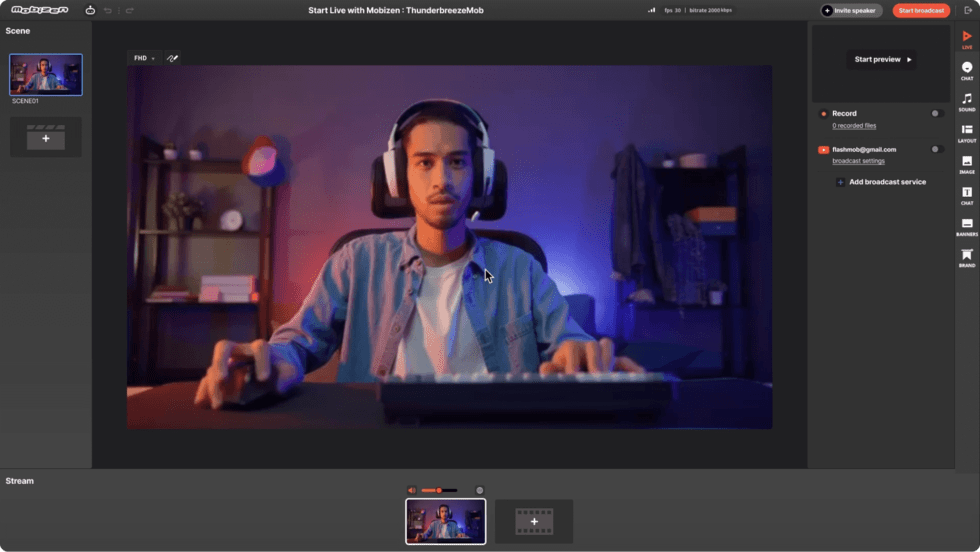
This course, likely titled Digital Media Production and Live Streaming, would focus on the practical skills and technical knowledge required to create, edit, and distribute multimedia content, with a heavy emphasis on live broadcasting and streaming platforms.
Key Learning Outcomes
The curriculum would be designed around the software tools and workflows illustrated in the image, which shows a multi-streaming setup (sending one stream to multiple platforms like YouTube and Twitch). Understanding Media Types: Students will first learn about various digital media formats, including audio (MP3, WAV), video (MP4, MOV), and image files (PNG, JPEG), and the codec technologies (e.g., H.264, VP9) used for compression and delivery. Core Software Proficiency: The course would provide hands-on training with professional streaming software (like OBS Studio or Streamlabs, as suggested by the icon). This includes mastering: Scene Composition: Creating and arranging multiple visual sources (webcams, game capture, screen sharing, overlays) into different scenes. Audio Mixing: Managing multiple audio inputs (microphones, desktop sound, music) and using filters for clarity. Encoding Settings: Optimizing bitrates, resolutions, and frame rates for smooth, high-quality streaming based on bandwidth limitations. Post-Production Basics: Students would also learn to use video editing software to create promotional content or edit VODs (Video On Demand) from live streams. This includes cutting, splicing, adding graphics, and color correction. Platform Integration: A major component is understanding how to connect the software to major streaming platforms (Twitch, YouTube, Facebook Live) using Stream Keys and configuring API connections for features like chat integration and alerts. Advanced Topics (Optional): This section could cover multi-streaming (as depicted in the image), graphic design for stream overlays, and using virtual cameras/green screens for professional effects.
Technical Skills Gained
Upon completion, students would possess the technical skills to: Set up and troubleshoot a full streaming rig (camera, mic, lighting, PC/console). Operate live streaming software confidently to produce a professional-quality broadcast. Optimize media files for both live and on-demand viewing. Manage a cohesive digital presence across various video platforms.